
GREEN TEA & GRAPE
Support cartilage where inflammation drives breakdown.
Green tea, grape seed and grape skin are three of the most researched plant materials on earth — and their science reaches the human osteoarthritic joint, the sensory nerves behind persistent pain, and the machinery that decides which genes a cell switches on.
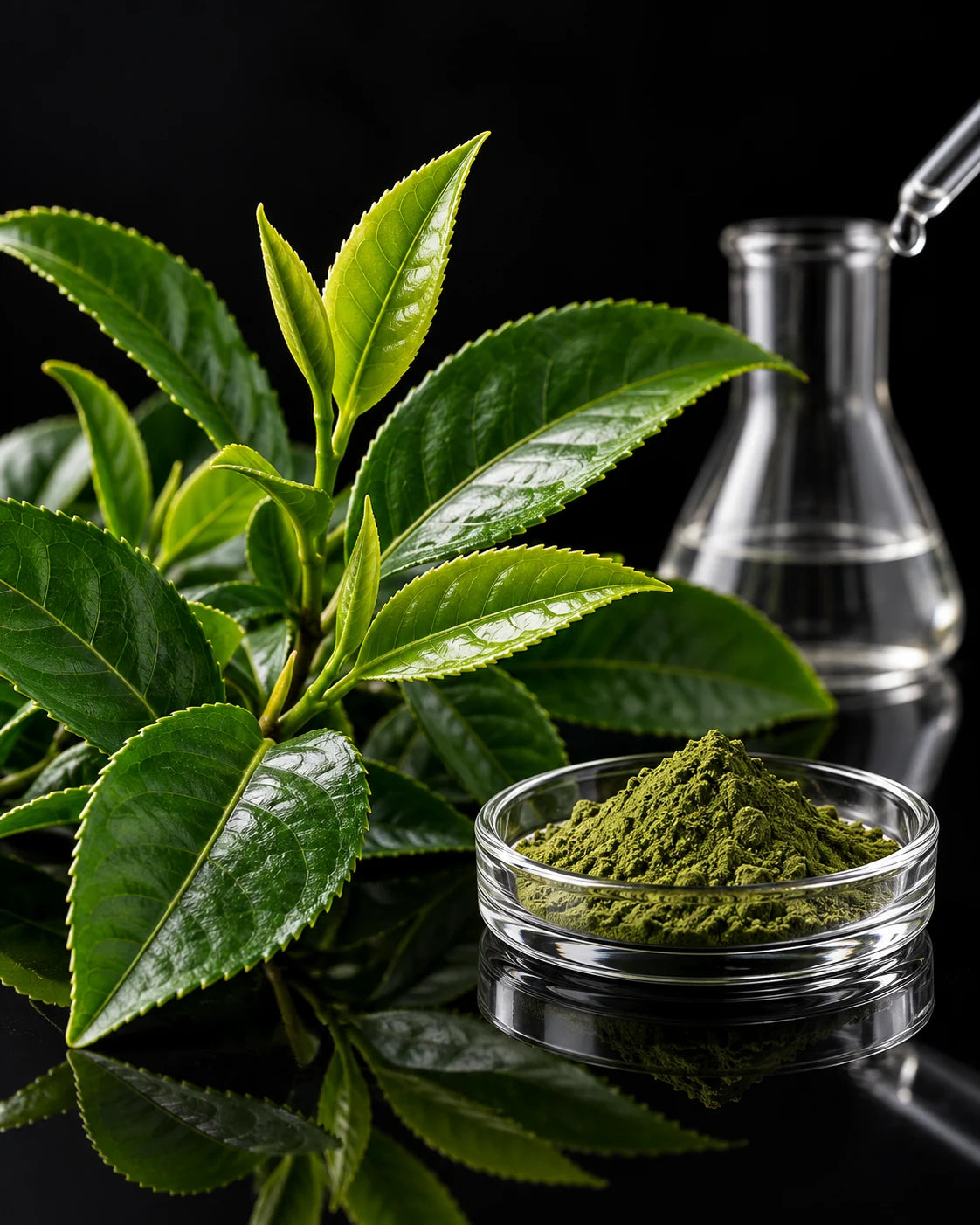
ULTIMATE brings together organic green tea extract, grape seed extract and grape skin extract. Green tea carries EGCG and its fellow catechins; grape seed carries proanthocyanidins; grape skin carries anthocyanins and resveratrol. Three distinct polyphenol systems, each with its own joint, nerve and human-skin research — chosen to broaden ULTIMATE’s biology rather than repeat it.
Green tea extract · grape seed extract · grape skin extract
In the balm: Green tea, grape seed and grape skin extracts in ULTIMATE.
On this page
At a glance
Green tea — Camellia sinensis leaf extract · catechins including EGCG · certified organic
Grape seed — Vitis vinifera seed extract · proanthocyanidins / procyanidins · catechin · epicatechin
Grape skin — Vitis vinifera skin extract · anthocyanins · resveratrol and related stilbenes
Product — ULTIMATE
Joint research — human osteoarthritis chondrocytes · human cartilage explants · MMP-13 · ADAMTS-5 · COX-2/PGE₂ · NF-κB · synovium and bone
Nerve research — allodynia and hyperalgesia · dorsal-root-ganglion TLR4/MyD88/NF-κB · spinal glia · Schwann cells · nerve conduction
Human topical evidence — EGCG and green-tea polyphenols in human skin · grape-seed creams and ointments in randomised human trials
Start inside the human osteoarthritic joint
EGCG has been studied directly in human OA chondrocytes
Researchers took primary chondrocytes from human osteoarthritic cartilage and exposed them to interleukin-1β — the inflammatory signal associated with cartilage degradation. EGCG suppressed all 29 proteins that IL-1β up-regulated in the study’s cytokine array, and the investigators confirmed changes across selected inflammatory genes and signalling pathways.
ALL 29 IL-1β-INDUCED PROTEINS SUPPRESSED
EGCG was altering signalling and gene expression inside human osteoarthritic cartilage cells.
Read the human OA chondrocyte study →
The cartilage-degrading enzymes — MMP-13 and ADAMTS-5
Two names recur throughout the green tea osteoarthritis literature: MMP-13 and ADAMTS-5. They matter because in a painful, worn joint, cartilage is not merely inflamed — its extracellular matrix is physically broken down.
MMP-13 is a collagenase with a major role in degrading type-II collagen — the principal collagen of articular cartilage.
ADAMTS-5 is an aggrecanase that breaks down aggrecan — the large proteoglycan that helps cartilage hold water and withstand compression.
Together they reach the two defining structural components of cartilage. And EGCG has been studied directly against both systems in human cartilage biology.
Human cartilage and MMP-13
In human cartilage explants, EGCG inhibited IL-1β-induced glycosaminoglycan release. In human chondrocytes it also inhibited IL-1β-induced expression of MMP-1 and MMP-13 at both the mRNA and protein level.
Human cartilage tissue → inflammatory signalling → matrix-degrading enzymes.
Read the human cartilage MMP-13 study →
A second human OA-chondrocyte study approached MMP-13 from another direction. Advanced glycation end products — AGEs — accumulate in long-lived tissues with age and can stimulate inflammatory and catabolic signalling in cartilage. In human OA chondrocytes, EGCG significantly reduced AGE-induced TNF-α and MMP-13 gene expression and production, through suppression of p38-MAPK and JNK signalling and inhibition of NF-κB activation.
Green tea can regulate the regulators
The next layer is the machinery deciding which proteins a cell produces in the first place. MicroRNAs are short non-coding RNA molecules that help control whether particular messenger RNAs are translated, suppressed or degraded — powerful regulators of gene expression, several of them closely linked to cartilage maintenance, inflammation and matrix destruction.
EGCG → miR-140-3p → ADAMTS-5
miR-140 is one of the most important cartilage-associated microRNAs. Human articular cartilage expresses it, its expression is reduced in osteoarthritic cartilage, and one of its important targets is ADAMTS-5. Researchers examined 1,347 microRNAs in IL-1β-stimulated human osteoarthritis chondrocytes treated with EGCG. The response was remarkably selective: 19 increased, 17 decreased and 1,311 were unchanged.
IL-1β reduced miR-140-3p while increasing ADAMTS-5. EGCG moved that relationship in the opposite direction — miR-140-3p up, ADAMTS-5 down — and when researchers interfered with miR-140-3p, the effect reversed, confirming the microRNA as part of the mechanism.
EGCG → increased miR-140-3p → suppression of the aggrecan-degrading enzyme ADAMTS-5.
Read the EGCG microRNA study →
EGCG → miR-199a-3p → COX-2 → PGE₂
A separate study in IL-1β-stimulated human osteoarthritis chondrocytes found EGCG increased miR-199a-3p while reducing COX-2 expression and PGE₂ production. When researchers inhibited miR-199a-3p, COX-2 and PGE₂ rose again. COX-2/PGE₂ signalling sits at one of the classic intersections between inflammation and pain sensitisation.
Read the EGCG miR-199a-3p study →
A third pathway — PTEN / miR-29b
Human OA cartilage shows substantially higher miR-29b-3p than healthy cartilage. In IL-1β-stimulated chondrocytes, EGCG reduced miR-29b-3p, MMP-13 and IL-6 while improving cell viability and extracellular-matrix production.
Read the PTEN / miR-29b study →
Green tea catechins reach the regulatory RNAs sitting upstream of multiple genes involved in cartilage and inflammatory biology.
From cartilage to the nervous system
The neural story is equally compelling. In a chronic constriction injury model, EGCG improved mechanical allodynia and thermal hyperalgesia while reducing spinal TLR4, HMGB1, NF-κB, TNF-α and IL-1β signalling. In a sciatic-nerve crush model, EGCG was associated with faster functional recovery, morphological nerve rescue and axonal and myelin regeneration.
Read the EGCG neuropathic-pain study →
Read the EGCG nerve-regeneration study →
A later nerve-injury study found EGCG reduced thermal hyperalgesia alongside lower spinal CX3CL1 — fractalkine — a neuron-glia signalling molecule. And in a 2025 model of chemotherapy-induced peripheral neuropathy, EGCG attenuated mechanical hypersensitivity, restored neuronal IGF-1 expression in the dorsal root ganglia and suppressed neuroinflammation.
Read the EGCG / CX3CL1 study →
Read the 2025 EGCG peripheral-neuropathy study →
Green tea’s biology extends well beyond cartilage — into the sensory nerves behind persistent pain.
Gene regulation goes deeper still
EGCG research reaches two of the classic systems controlling how genetic information is accessed: DNA methylation and histone/chromatin modification. In a landmark study, EGCG directly inhibited DNA methyltransferase (DNMT) activity and reactivated methylation-silenced genes in human cell lines. In human endothelial cells, EGCG inhibited HDAC activity, increased histone-acetylation marks and shifted chromatin toward a more relaxed architecture — and at specific NF-κB-regulated inflammatory genes, it reduced recruitment of NF-κB p65 and p300 while lowering inflammatory gene expression.
Read the EGCG chromatin study →
Read the EGCG NF-κB promoter study →
Osteoarthritis itself involves profound changes in gene regulation. A paired human-cartilage study identified 1,214 differentially methylated targets between mild and severe osteoarthritic cartilage, and a 2024 study of cartilage from 170 people undergoing knee replacement found widespread epigenomic differences associated with cartilage degeneration.
Read the human cartilage methylation study →
Read the 170-person cartilage epigenomics study →
Different molecules. Different regulatory systems. A shared level of biology: control of gene expression.
Green tea has direct human topical evidence
For a balm, one question matters most: can green-tea catechin biology be demonstrated when the material is applied to human skin? Human experiments say yes. In volunteers exposed to UVB, topical EGCG applied beforehand reduced inflammatory-leukocyte infiltration, myeloperoxidase activity, erythema and prostaglandin metabolites including PGE₂ — measured in treated human skin.
Read the human-skin EGCG study →
Topical green-tea polyphenols substantially reduced UV-induced DNA lesions — cyclobutane pyrimidine dimers — in human epidermis, by approximately 60–81% across increasing UV exposures. Another human-skin study found topical EGCG markedly reduced hydrogen peroxide, nitric oxide, lipid peroxidation and inflammatory-cell infiltration while protecting glutathione-related antioxidant systems. And topically applied green and white tea extracts protected human skin against solar-simulated UV with a measured SPF of just 1 — biology, not sunscreen.
Read the human-skin DNA-protection study →
Read the human-skin oxidative-stress study →
Read the green and white tea human-skin study →
Green tea in skin — delivery research
A full-thickness human-skin study measured substantial intradermal uptake of topical EGCG. A Franz-diffusion study using fresh human skin quantified EGCG from green-tea extract formulations in the stratum corneum, viable epidermis and dermis. Human-skin permeation research showed catechin behaviour depends on molecular structure and vehicle, and in human volunteers, tape-stripping studies recovered around 36% of applied topical EGCG within the stratum corneum.
Read the human-skin pharmacokinetic study →
Read the human-skin Franz study →
Read the catechin permeation study →
Read the in-vivo human penetration study →
Vehicle, molecular structure and skin partitioning all shape where catechins end up — which is why formulation is part of the green tea story.
Grape seed — start with pain and the joint
Grape seed earned its place because its research crosses three areas that define ULTIMATE: joint-matrix damage, peripheral pain signalling and the regulation of gene expression. In a rat model of knee osteoarthritis, grape-seed proanthocyanidin extract improved paw-withdrawal latency, paw-withdrawal threshold and hind-limb weight bearing — and reduced chondrocyte loss, proteoglycan loss, MMP-13, IL-1β, nitrotyrosine, osteophyte formation and subchondral-bone fractures.
Pain behaviour. Cartilage biology. Physical joint structure. One experiment.
Read the grape-seed osteoarthritis study →
MMP-13 is particularly interesting inside ULTIMATE because independent research on several ingredients reaches cartilage-degrading biology: green tea reaches MMP-13, mangosteen reaches MMP-13, grape seed reaches MMP-13 — chemically very different systems arriving at an important joint-degradation pathway from different directions.
Procyanidin B3
Grape seed contains a family of related flavan-3-ol structures. One of them, procyanidin B3, was isolated from grape seeds and tested in primary chondrocytes and a surgical osteoarthritis model. In chondrocytes, B3 reduced oxidative-stress-induced apoptosis, suppressed iNOS and protected differentiation markers; in the OA model it protected articular cartilage, reduced chondrocyte apoptosis and reduced abnormal cartilage formation around the joint.
Read the procyanidin B3 study →
Beyond cartilage — synovium and bone
A joint is more than cartilage. In collagen-induced arthritis, grape-seed proanthocyanidin extract reduced clinical arthritis severity, synovial inflammation, cartilage erosion, bone erosion and TRAP-positive osteoclasts, along with TNF-α and IL-17 signalling. A separate study found it reduced osteoclast differentiation and activity while increasing osteoblast differentiation — and in human cells it suppressed RANKL in rheumatoid-arthritis-derived fibroblasts and inhibited osteoclast formation.
Read the grape-seed arthritis study →
Read the grape-seed bone-remodelling study →
TLR4 → MyD88 → NF-κB
Another arthritis study focused on an important inflammatory signalling chain. TLR4 acts as a pattern-recognition receptor, MyD88 transmits that signal inside the cell, and NF-κB then switches on a large network of inflammatory genes. Grape-seed proanthocyanidins reduced TLR4, MyD88 and phosphorylated IκBα and reduced nuclear movement of NF-κB p65 and p50 — and suppressed TLR4 activation in fibroblast-like synoviocytes from people with rheumatoid arthritis and osteoarthritis.
Read the TLR4 / MyD88 / NF-κB arthritis study →
From the joint to the sensory nerves
The dorsal root ganglia
A 2024 study examined grape-seed-derived procyanidins after spinal-nerve injury. Treatment reduced mechanical allodynia and thermal hyperalgesia. Looking inside the pain system, researchers found nerve injury had increased TLR4 in sensory neurons of the dorsal root ganglia — and grape-seed procyanidins reduced that increase, along with MyD88, phosphorylated NF-κB p65 and IBA1, while calming activation of spinal microglia and astrocytes.
The same TLR4 → MyD88 → NF-κB axis appears in both joint inflammation and nerve pain — grape seed reaches both.
Read the grape-seed nerve-pain study →
Healthy nerve repair versus pain-driving regrowth
The same experiment produced one of the most fascinating findings in the grape-seed literature. As neuropathic pain behaviour decreased, so did injury-driven regenerated nerve fibres, myelination and GAP43-associated regenerative activity. After nerve injury, regrowing axons can either restore useful connections or sprout in disorganised, poorly targeted ways that feed persistent pain signalling.
What kind of nerve growth is occurring — and what is it doing to pain signalling?
Grape-seed procyanidins calmed the pain-associated side of that response — a far more sophisticated picture of nerve biology than “more growth is better.”
Additional nerve-pain evidence
In a chronic constriction injury model of the sciatic nerve, a standardised grape-seed proanthocyanidin extract reduced mechanical allodynia and thermal hyperalgesia and improved oxidative-stress markers in injured nerve tissue.
Read the grape-seed neuropathic-pain study →
Schwann cells and nerve conduction
Schwann cells form and support the myelin around peripheral nerves. In experimental diabetic peripheral neuropathy — with slower sciatic and tibial nerve conduction, Schwann-cell injury, calcium overload and endoplasmic-reticulum stress — grape-seed proanthocyanidins increased nerve-conduction velocity and protected against Schwann-cell damage, Ca²⁺ overload and ER stress.
Beyond pain signalling: the biology of the cells that keep peripheral nerves conducting well.
Read the grape-seed nerve-conduction study →
Grape seed and gene regulation
Grape-seed proanthocyanidins have produced an unusually detailed epigenetic profile in human cell studies: reduced global DNA methylation and 5-methylcytosine; lower DNMT activity, with DNMT1, DNMT3a and DNMT3b all reduced at mRNA and protein level; lower HDAC activity; increased acetylation at H3K9, H3K14, H4K5, H4K12 and H4K16; reduced repressive H3K9 methylation; and re-expression of previously silenced genes.
Read the grape-seed epigenetics study →
A separate in-vivo study independently showed grape-seed procyanidin extract reduced Class-I HDAC activity and increased histone acetylation, and directly inhibited HDAC2 and HDAC3.
Green tea and grape seed reach gene regulation from different directions — and converge on the control of gene expression.
Grape seed has direct human topical evidence
Grape seed has been deliberately formulated and applied directly to human skin in controlled research. In a double-blind clinical study, a 2% grape-seed-extract cream after removal of small skin lesions brought average complete repair to around day 8, versus around day 14 with placebo.
Read the grape-seed cream study →
129-person randomised topical trial
A double-blind randomised controlled trial in 129 women after caesarean section compared 2.5% and 5% grape-seed-extract ointments with petrolatum. Wound healing was assessed for redness, oedema, ecchymosis, discharge and approximation. The 5% grape-seed ointment produced significantly better scores than both comparators at days 6 and 14.
Read the 129-person topical grape-seed trial →
In living human skin, grape-seed proanthocyanidins applied before solar-simulated UV reduced sunburn cells and mutant-p53-positive epidermal cells and better preserved Langerhans cells. And a water-in-oil emulsion containing grape-seed extract, used on human cheek skin for eight weeks, produced significant improvements over the base formulation, with no hypersensitivity reported.
Read the human-skin grape-seed UV study →
Read the eight-week grape-seed skin study →
Underneath those human findings, topical grape-seed proanthocyanidins accelerated wound contraction and closure with greater connective-tissue deposition and improved tissue architecture in experimental work, and increased inducible VEGF in keratinocytes.
Read the grape-seed tissue-repair study →
Read the keratinocyte VEGF study →
What are grape-seed proanthocyanidins?
“OPC” is often used as though it describes one molecule. Grape-seed proanthocyanidins are a family of polyphenolic structures built largely from flavan-3-ol units such as catechin and epicatechin, occurring as monomers, dimers, oligomers and larger polymers, with characterised procyanidin dimers including B1, B2, B3 and B4, along with gallated compounds. That molecular diversity is the point: grape seed is a complex procyanidin system, brought into ULTIMATE as a concentrated organic Vitis vinifera seed extract.
Grape skin — resveratrol and the colour of red grapes
The skin of the red grape is where the vine concentrates its most famous protective chemistry: the deep-red anthocyanins behind its colour and the stilbenes led by trans-resveratrol, which the plant produces to defend itself. A review of Vitis vinifera as a cosmetic raw material describes grape skin’s polyphenols — flavonoids, catechin derivatives, anthocyanins and stilbenoids including trans-resveratrol and trans-ε-viniferin — as the basis of its biological activity.
Read the Vitis vinifera cosmetic-material review →
Resveratrol in human articular chondrocytes
In human articular chondrocytes stimulated with IL-1β, resveratrol suppressed inflammatory signalling and apoptosis and inhibited the expression of VEGF, MMP-3, MMP-9 and COX-2 — the same cartilage-degrading and prostaglandin pathways that run through the green tea and grape seed research.
Read the resveratrol human-chondrocyte study →
Resveratrol and curcumin — synergy in human cartilage cells
Resveratrol and curcumin both target NF-κB, but from different points: resveratrol by inhibiting the proteasome, curcumin by inhibiting upstream kinases. When researchers combined them in IL-1β-stimulated human articular chondrocytes, they found synergistic chondroprotective effects — stronger inhibition of NF-κB-mediated inflammation and apoptosis than either alone. ULTIMATE carries both: grape skin alongside liposomal turmeric.
Read the resveratrol + curcumin synergy study →
Resveratrol in people with knee osteoarthritis
In a 90-day randomised, double-blind, placebo-controlled trial of 110 adults with mild to moderate knee osteoarthritis, resveratrol supplementation alongside standard care produced a significant, time-dependent decrease in knee pain, with serum IL-1β, IL-6, TNF-α and C-reactive protein significantly reduced compared with placebo.
Read the resveratrol knee-OA trial →
Resveratrol has human skin research too: in an 8-week randomised placebo-controlled trial, trans-resveratrol applied to facial skin increased skin sebum, and combined oral and topical use significantly reduced wrinkle scores.
Read the trans-resveratrol skin trial →
Grape skin adds the vine’s own protective chemistry to ULTIMATE’s joint story.
How green tea and grape fit the rest of ULTIMATE
ULTIMATE was designed so each ingredient broadens the biology. Mangosteen contributes xanthone chemistry across inflammatory and oxidative pathways. Pomegranate brings ellagitannins with unusually relevant topical inflammatory and skin-delivery research. Ginger and turmeric bring their legendary joint traditions in liposomal form. Clove, peppermint and bergamot reach the sensory nerves directly.
And green tea and grape contribute:
cartilage-degrading enzyme regulation · MMP-13 · ADAMTS-5 · COX-2/PGE₂ · synovium and bone biology · dorsal-root-ganglion pain signalling · Schwann cells and nerve conduction · microRNAs · DNMT and HDAC regulation · direct human topical evidence
Three familiar plants. A remarkably sophisticated body of science.
Technical evidence map
CannonBalm materials — organic green tea extract, grape seed extract and grape skin extract in ULTIMATE.
Green tea — EGCG in human OA chondrocytes (29 IL-1β-induced proteins suppressed; MMP-1/-13; miR-140-3p → ADAMTS-5; miR-199a-3p → COX-2/PGE₂; miR-29b); experimental neuropathic pain and nerve regeneration; human topical skin studies; human-skin delivery.
Grape seed — experimental knee OA (pain, MMP-13, cartilage, bone); collagen-induced arthritis; TLR4/MyD88/NF-κB in synoviocytes and DRG; Schwann cells and nerve conduction; DNMT/HDAC; 129-person randomised topical trial.
Grape skin — resveratrol in human articular chondrocytes; resveratrol + curcumin synergy; randomised knee-OA trial; randomised topical skin trial.
Selected authoritative research
EGCG in human OA chondrocytes
Akhtar N, Haqqi TM. Arthritis Research & Therapy. 2011. PMID 21682898.
EGCG, MMP-1 and MMP-13 in human cartilage
Ahmed S et al. JPET. 2004. PMID 14600251.
EGCG, AGEs, TNF-α and MMP-13
Rasheed Z et al. Arthritis Research & Therapy. 2009. PMID 19445683.
EGCG and global microRNA expression — miR-140-3p and ADAMTS-5
Rasheed Z et al. European Journal of Nutrition. 2018. PMID 28110479.
EGCG, miR-199a-3p and COX-2
Rasheed Z et al. Journal of Cellular and Molecular Medicine. 2016. PMID 27515563.
EGCG and the PTEN/miR-29b pathway
Yang D et al. Pharmaceutical Biology. 2022. PMID 35260041.
EGCG and neuropathic pain
Kuang X et al. European Journal of Pharmacology. 2012. PMID 22173123.
EGCG and sciatic-nerve regeneration
Renno WM et al. Neurochemistry International. 2013. PMID 23313191.
EGCG and spinal CX3CL1
Bosch-Mola M et al. Phytotherapy Research. 2017. PMID 27896922.
EGCG and chemotherapy-induced peripheral neuropathy
Kang W et al. Neuropharmacology. 2025. PMID 40882703.
EGCG and DNA methyltransferase
Fang MZ et al. Cancer Research. 2003. PMID 14633667.
EGCG, histones and chromatin
Ciesielski O et al. Molecules. 2020. PMID 32429384.
EGCG at NF-κB target genes
Liu D et al. Journal of Nutritional Biochemistry. 2016. PMID 26878794.
Human OA cartilage methylation
Moazedi-Fuerst FC et al. Journal of Orthopaedic Research. 2014. PMID 25212754.
Epigenomics across OA cartilage grades
Kreitmaier P et al. Osteoarthritis and Cartilage. 2024. PMID 39053729.
Topical EGCG in human skin
Katiyar SK et al. Photochemistry and Photobiology. 1999. PMID 10048310.
Green-tea polyphenols and DNA damage in human skin
Katiyar SK et al. Clinical Cancer Research. 2000. PMID 11051231.
Topical EGCG and oxidative stress in human skin
Katiyar SK et al. Carcinogenesis. 2001. PMID 11181450.
Green and white tea extracts on human skin
Camouse MM et al. Experimental Dermatology. 2009. PMID 19492999.
Topical EGCG pharmacokinetics in human skin
Dvorakova K et al. 1999. PMID 10071985.
EGCG penetration into human skin
dal Belo SE et al. Skin Pharmacology and Physiology. 2009. PMID 19786823.
Catechin permeation and cutaneous metabolism
Wisuitiprot W et al. International Journal of Cosmetic Science. 2011. PMID 21790662.
In-vivo human skin penetration of EGCG
Scalia S et al. Acta Pharmaceutica. 2014. PMID 24914725.
Grape-seed proanthocyanidins in experimental knee OA
Woo YJ et al. Experimental & Molecular Medicine. 2011. PMID 21795829.
Procyanidin B3 in chondrocytes and surgical OA
Aini H et al. PLoS ONE. 2012. PMID 22629448.
Grape-seed extract in collagen-induced arthritis
Cho ML et al. Immunology Letters. 2009. PMID 19446580.
Grape-seed extract and bone destruction
Park JS et al. PLoS ONE. 2012. PMID 23251512.
Grape-seed proanthocyanidins — TLR4/MyD88/NF-κB in arthritis
Kim SH et al. Korean Journal of Internal Medicine. 2018. PMID 27271273.
Grape-seed procyanidins and neuropathic pain
Hu L et al. Molecular Pain. 2024. PMID 38716504.
Grape-seed extract in chronic constriction injury
Kaur G et al. 2016. PMID 26378488.
Proanthocyanidins, Schwann cells and nerve conduction
Ding Y et al. Journal of Nutritional Biochemistry. 2014. PMID 24791737.
Grape-seed proanthocyanidins — DNA methylation and histones
Vaid M et al. Toxicology and Applied Pharmacology. 2012. PMID 22749965.
Grape-seed procyanidins — in-vivo HDAC inhibition
Downing LE et al. Molecular Nutrition & Food Research. 2017. PMID 27624175.
Grape-seed 2% cream — human study
Hemmati AA et al. Global Journal of Health Science. 2015. PMID 25948437.
Grape-seed ointment — 129-person randomised trial
Izadpanah A et al. Complementary Therapies in Clinical Practice. 2019. PMID 31003677.
Topical grape-seed proanthocyanidins in UV-exposed human skin
Yuan XY et al. Photomedicine and Laser Surgery. 2012. PMID 22103910.
Eight-week grape-seed emulsion on human skin
Sharif A et al. International Journal of Cosmetic Science. 2015. PMID 25402429.
Grape-seed proanthocyanidins and dermal tissue repair
Khanna S et al. Free Radical Biology & Medicine. 2002. PMID 12374620.
Grape-seed proanthocyanidins and keratinocyte VEGF
Khanna S et al. Free Radical Biology & Medicine. 2001. PMID 11425488.
Vitis vinifera as a cosmetic raw material
Sharafan M et al. Pharmaceutics. 2023. PMID 37242614.
Resveratrol in human articular chondrocytes
Shakibaei M et al. Biochemical Pharmacology. 2008. PMID 18606398.
Resveratrol and curcumin — synergy in human chondrocytes
Csaki C et al. Arthritis Research & Therapy. 2009. PMID 19889203.
Resveratrol in knee osteoarthritis — randomised trial
Marouf BH et al. Journal of Medicinal Food. 2018. PMID 30160612.
Trans-resveratrol and skin — randomised trial
Rao A et al. Frontiers in Aging. 2025. PMID 41488277.
Where Science Meets Nature.
Support cartilage where inflammation drives breakdown.
Beneath three of the world’s most familiar plants sits a remarkably sophisticated body of cartilage, peripheral-pain, human-skin and gene-regulation science.